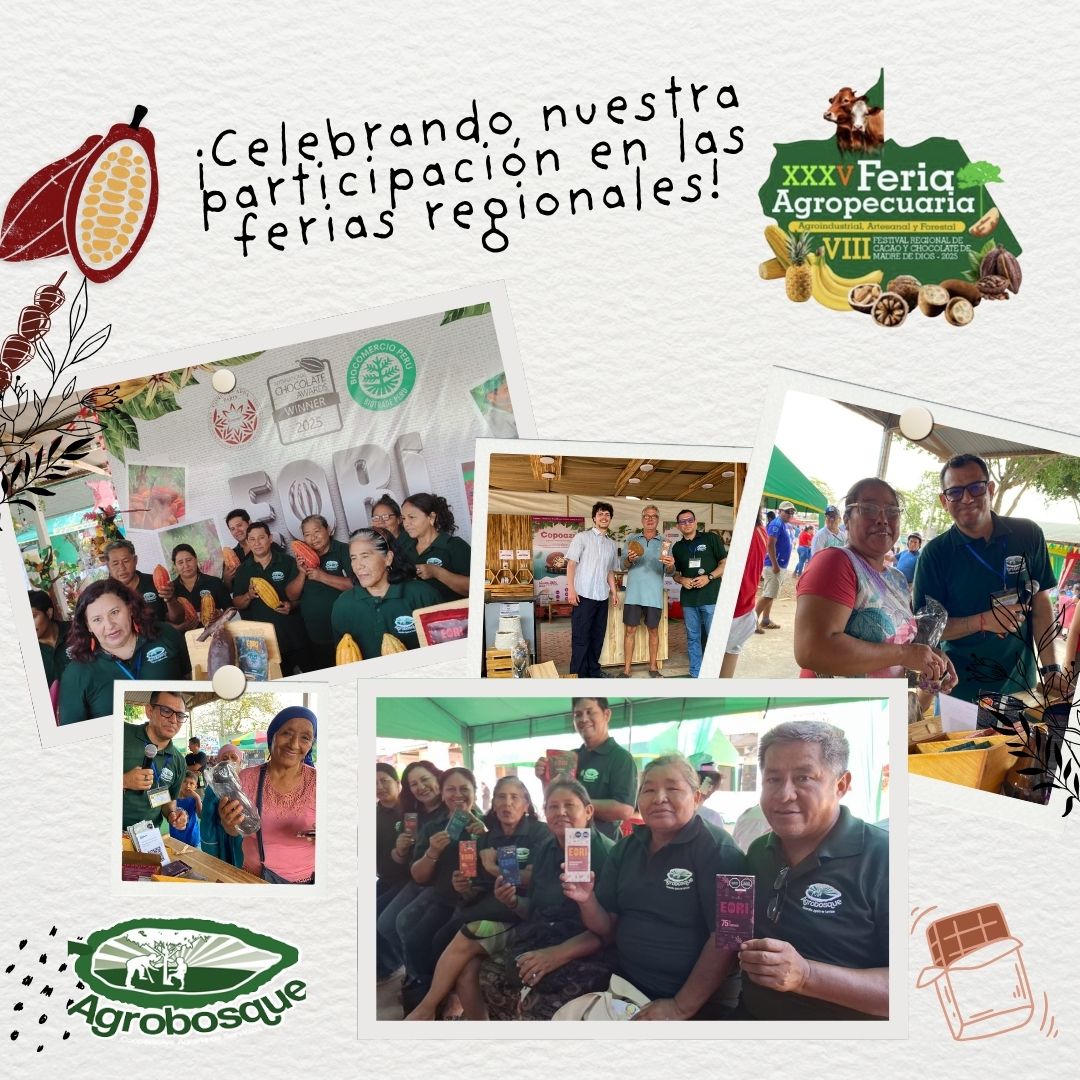
The Agrobosque Cooperative promotes a sustainable cocoa production model in Madre de Dios, a region that is diverse by nature but threatened by illegal mining and deforestation. It brings together 127 producer families who cultivate more than 400 hectares of cacao in agroforestry systems, demonstrating that it is possible to generate economic development while conserving the Amazon rainforest. Through organized work, ongoing training, and the use of its own processing plant, Agrobosque transforms the beans into a wide range of value-added products—nibs, paste, powder, butter, couverture, grageas, bitter chocolates, and spreadable cream—guaranteeing quality, traceability, and sustainable origin. This experience has made it possible to conserve more than 4,000 hectares of forest, strengthen the leadership of women and young people—who represent 40% of the productive force—and position the cooperative as an Amazonian benchmark in socio-environmental justice. Agrobosque is living proof that it is possible to produce without destroying.
Country: Perú,
When did this experience begin?: 07/01/2014
At what stage is the experience currently?: It's a consolidated. established experience
Is the experience legally recognized?: Yes
Where does the experience take place?:
Name of the organization leading the experience: Cooperativa Agrobosque
Year in which it was established: 07/01/2014
Acronym (initials) of the organization: Agrobosque
Logo of the organization: 
Description of the Organization: The Agrobosque Cooperative is an organization of small producers in Madre de Dios dedicated to the cultivation and processing of cocoa under agroforestry systems. It was created in response to deforestation and illegal mining, with the aim of offering a sustainable alternative that generates decent incomes and conserves the Amazon rainforest. It is made up of 127 families who work collectively to guarantee grade 1 cocoa with traceability, quality, and responsible origin. With the active participation of women and young people, the cooperative promotes the well-being of its communities and positions itself as a key player in building a purposeful Amazonian economy.
Address of the organization's headquarters: Car. Interoceanica Km. 129 Com. Santa Rita Baja (Puerto Maldonado Cusco Margen Izquierda)
We conserve 4,000 hectares of forest, our work benefits 127 families, and we have 400 hectares of agroforestry systems with sustainable management practices from which we obtain the cocoa we produce.
Context: The Agrobosque Cooperative is located in the Madre de Dios region, recognized as the biodiversity capital of Peru, but also one of the areas most vulnerable to illegal mining, deforestation, and indiscriminate logging. Its 127 member families carry out their activities in buffer zones of Manu National Park and Tambopata National Reserve, strategic territories for the conservation of the Amazon. The context combines great natural wealth with strong socio-environmental pressures: mercury pollution of rivers, loss of forests, insecurity associated with illegal economies, and the effective absence of the State in many rural communities. In response, the cooperative is committed to agroforestry management of more than 400 hectares of cocoa, contributing to the conservation of more than 4,000 hectares of forest and offering a sustainable economic alternative that includes women and young people. This territory, although threatened, is also a space of resistance and hope, where cocoa becomes a symbol of good living, socio-environmental justice, and production without destruction.

Social Issues:
Public healthLabor disputes

Cultural Issues:
Imposition of external models

Political Issues:
Absence of public institutionsCorruptionConflictos de soberanía nacionalCentralism

Economic Issues:
MiningIllegal Economies

Environmental Issues:
PollutionDeforestationDegradationDroughtsFloodsClimate changeForest firesDestruction of ecosystems
| Title | Unit | Number | Description |
|---|---|---|---|
| Hectáreas de cacao con manejo agroforestal | Hectares | 400 | |
| Hectáreas de bosques conservados | Hectares | 4000 | |
| Instituciones educativas beneficiadas | Institutions | 8 | |
| Fortalecimiento de capacidades de niñas y niños | Girls and boys | 300 | 300 children have strengthened their rights, participation, and leadership roles. |
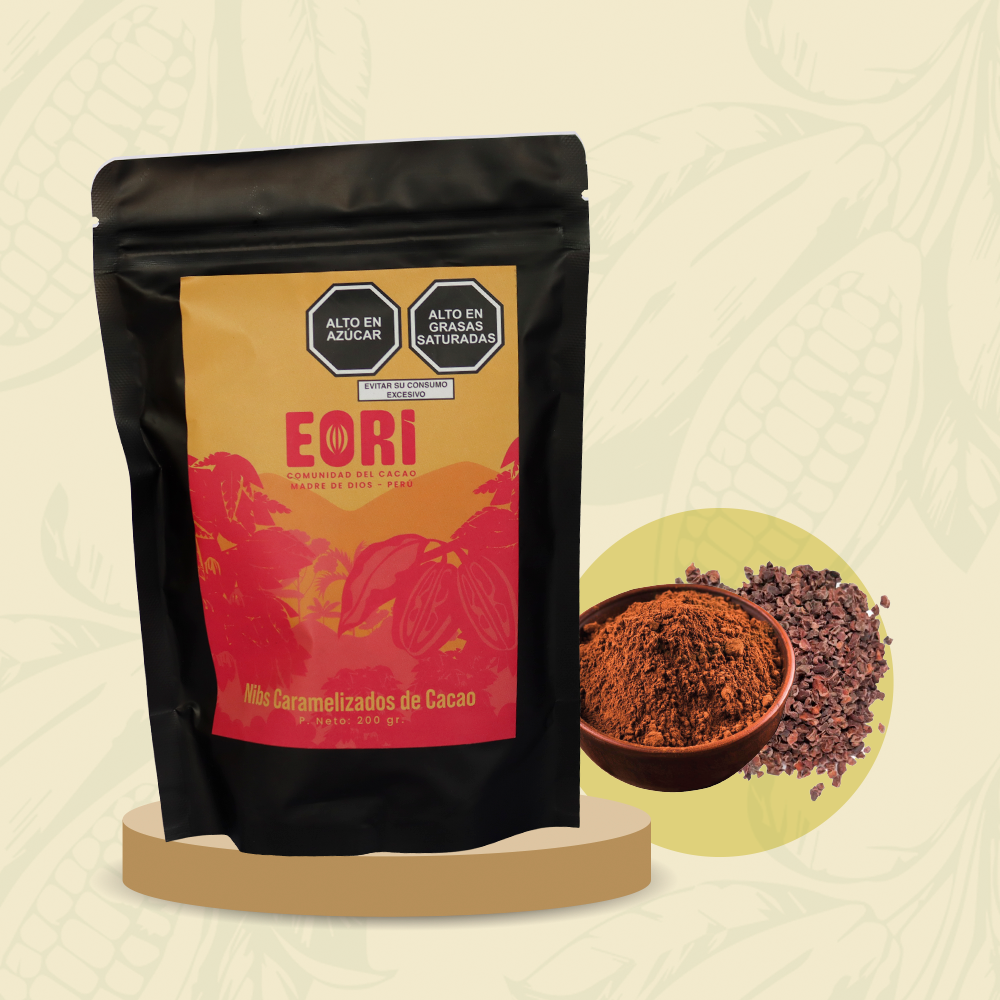
Nibs puro de cacao
18 Soles
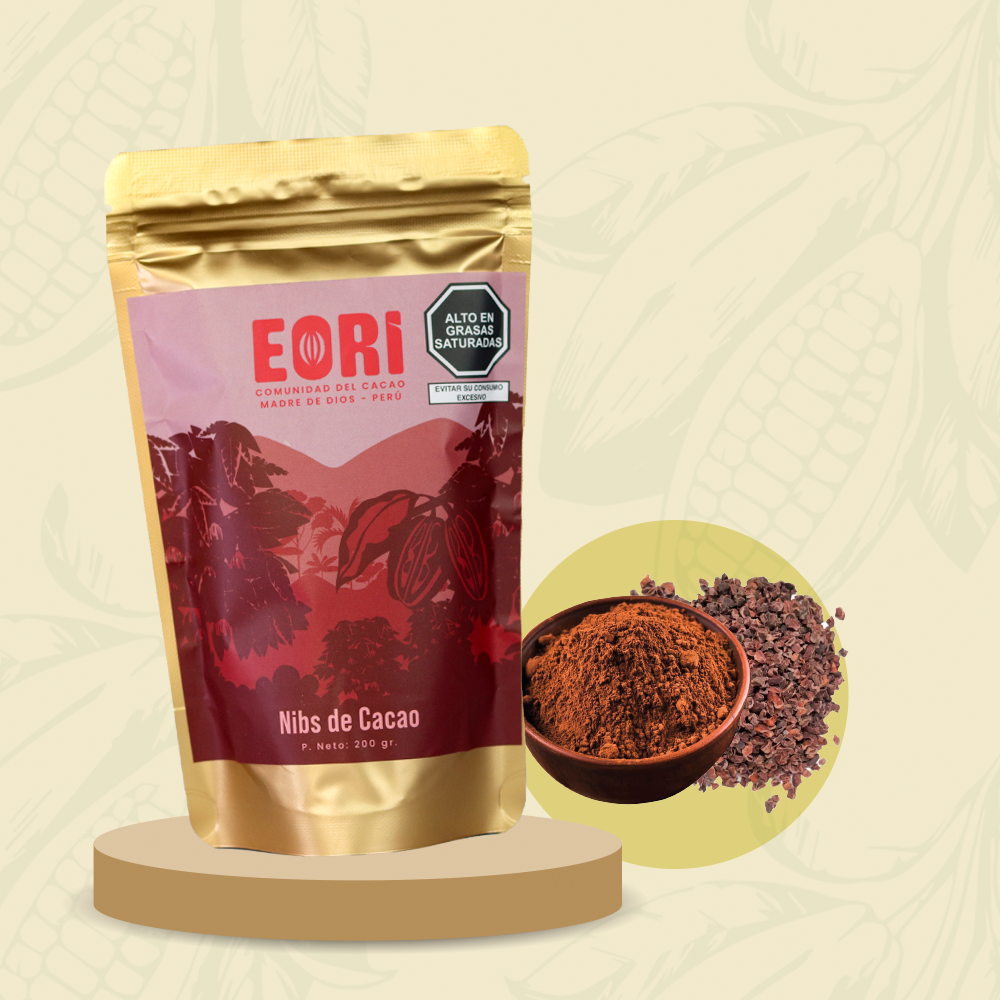
Nibs caramelizados
20 Soles
Chocolate blanco
10 Soles
Crema untable
20 Soles
Partners or Allied Organizations
| Organization Name | Organization Role in the Experience |
|---|---|
| Comisión Nacional para el Desarrollo y Vida sin Drogas | Aliada |
 Enter the LIBRARY
 Go to SIREPAM