REPAM
[gtranslate] [custom_language_switcher]

Login

REPAM

Experiences

Cocinando y Conservando

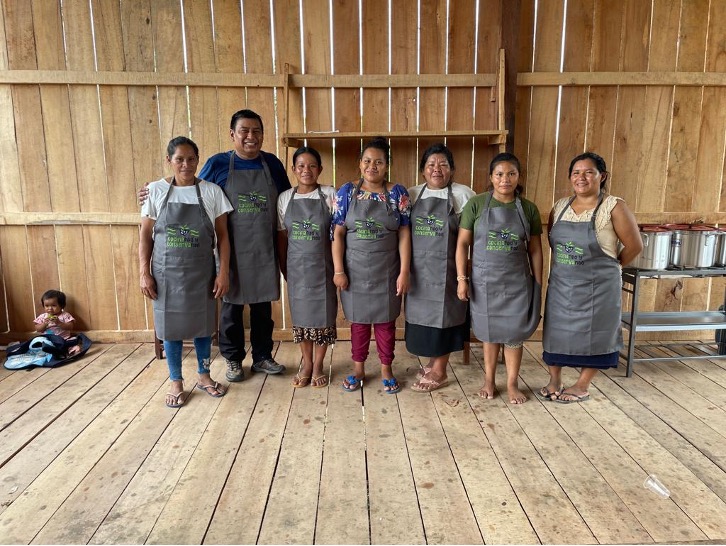
COOKING AND PRESERVING is an initiative that promotes the sustainable use of Amazonian products and the revival of native recipes to contribute to nutrition and food security among local communities. We believe that the souls of the Amazonian peoples are linked to the health of the rainforest, and we work alongside these communities to help them recreate their connection with the land and preserve their culinary traditions.

Country: Perú,

When did this experience begin?: 11/09/2016

At what stage is the experience currently?: It's a consolidated. established experience

Is the experience legally recognized?: Yes

Follow us on social media

Where does the experience take place?:

Information on the Legally Recognized Organization

Name of the organization leading the experience: COCINANDO Y CONSERVANDO EN LA AMAZONIA

Year in which it was established: 06/12/2022

Acronym (initials) of the organization: COCINANDO Y CONSERVANDO

Logo of the organization:
Description of the Organization: The organization's goals are to improve people's living conditions through education, health, culture, and environmental preservation. It also promotes sustainable activities and food security in indigenous communities and Amazonian populations, as well as other services that contribute to the development and progress of our community through a set of actions within the existing legal framework.

Address of the organization's headquarters: PUERTO MALDONADO-MADRE DE DIOS-PERU

Why does experience contribute to Socio-Environmental Justice and Good Living?

It is important to us that communities are independent in food production, that they have a healthy diet, and that they do not depend on processed foods that affect their health. At Cocinando y Conservando, we educate children and young people through workshops and activities that help them live better in their environment, raise awareness of the need to recover degraded areas, and participate in forest restoration and the promotion of food sovereignty in communities. The Amazon should not only be valued for mining and timber extraction. With this project, we are revaluing native crops and contributing to food security by safeguarding the forest.

The work carried out by the experience contributes to the following categories of Socio-Environmental Justice and Good Living.

Territorial Context of the Experience

Context: Cocinando y Conservando is located in the province of Tambopata – Tahuamanu and is being developed with native communities on the banks of the Las Piedras River, one of the most important tributaries of the Madre de Dios River. Currently, this ecosystem is not yet at risk from legal or illegal mining. However, these communities are suffering the impacts of deforestation and the pressures of the modern world, which are distancing them from their culture and putting the food sovereignty of the communities at risk. Recently, we have been facing threats due to the conservation processes being carried out with the communities.

Conflictividades sociales

Social Issues:

Persecution of leadersPublic health

Conflictividades culturales

Cultural Issues:

Loss of cultural identityImposition of external models

Conflictividades políticas

Political Issues:

Absence of public institutions

Conflictividades económicas

Economic Issues:

Monocultivants

Conflictividades ambientales

Environmental Issues:

Destruction of ecosystems

Progress, results and products of the territorial experience

Title Unit Number Description
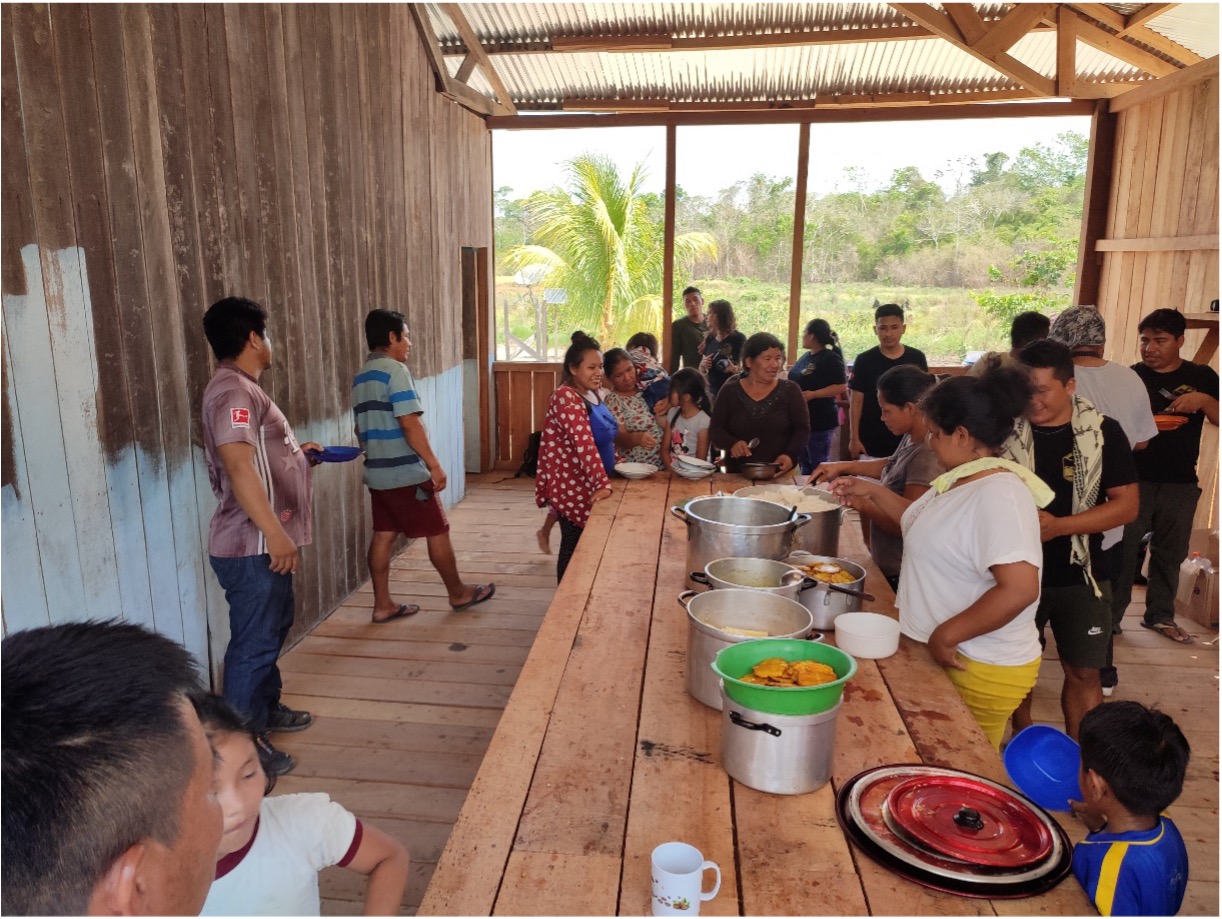
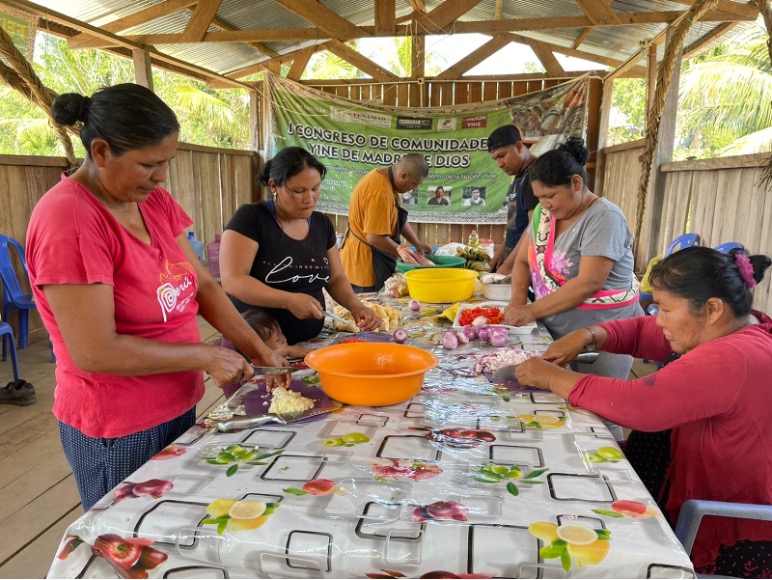
Talleres de cocina sostenible y seguridad alimentaria Native cuisine dishes 50 Twenty-five workshops on sustainable cooking and food safety were held using local products. Six indigenous communities in the region participated: La Victoria, Tipishka, Santa Teresita, Boca Pariamanu, Puerto Nuevo, and Monte Salvado. Ninety-five women from the communities took part in the workshops, with active participation from community members and residents in communities such as La Victoria and Tipishka.
Procesos de reforestación Tree planting 2000 A total of 2,000 trees were planted in degraded areas in the following territories and with the following species: In the native community of La Victoria, 200 trees were planted, distributed among Uvilla, Caimito, Anona, and Macambo (50 of each). In Tipishka, another 200 trees were planted, also with a variety of fruit species: Pijuayo, Mamey, Zapote, and Uvilla (50 of each). In Santa Teresita, 200 trees of Macambo, Uvilla, Zapote, and Copoazú (50 per species) were planted. The community of Boca Pariamanu held two reforestation days: on the first (March), they planted 200 trees of Uvilla, Orange, Breadfruit, and Anona; and in the second (April), 1,000 trees of both fruit and timber species were planted, including cedar, mahogany, chestnut, lupuna, and cacao (150 of each), as well as copoazú, sapote, cherimoya, macambo, and charichuela (50 of each species). These actions strengthen the processes of ecological recovery and restoration of vegetation cover in Amazonian indigenous territories.
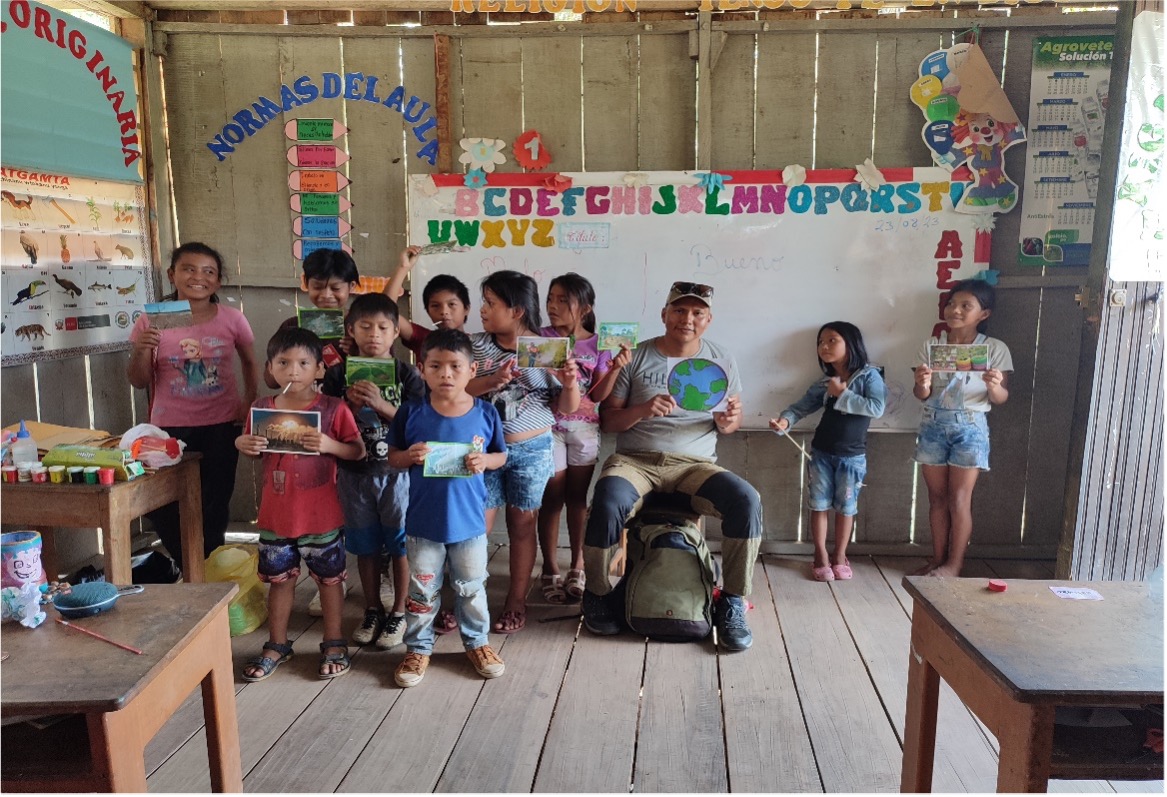
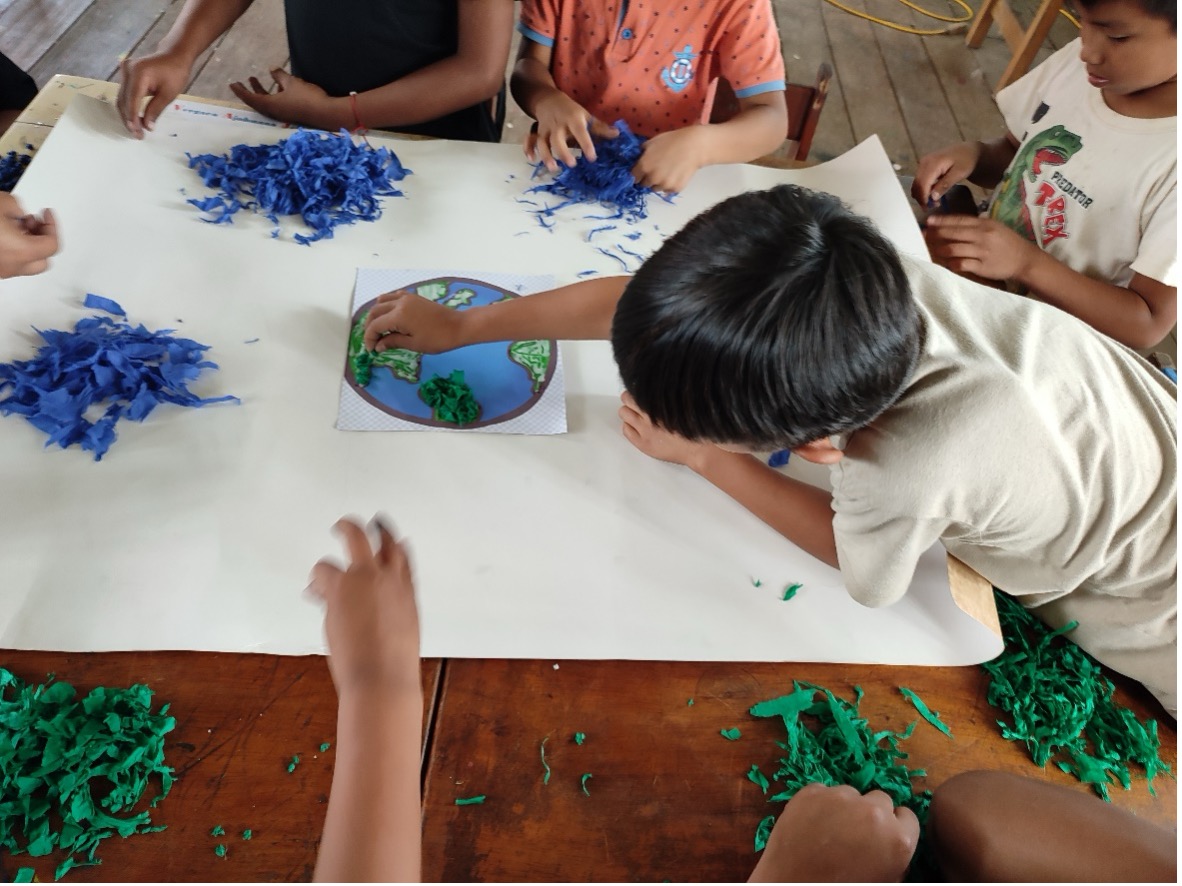
Procesos de Educación ambiental Workshops 11 Around 71 children participated, addressing topics such as climate change, recycling, caring for the earth, river wolves (as a symbol of local wildlife and conservation), educational and recreational games, and endangered animals. These activities took place in the native communities of Santa Teresita, Boca Pariamanu, La Victoria, and Tipishka.
Construcción de cocinas Built-in kitchens 4 Four community kitchens with the active participation of community members from the native communities of Puerto Nuevo, Boca Pariamanu, Santa Teresita, and Monte Salvado. These kitchens were equipped with different items, depending on the needs and conditions of each territory, including sinks, access to water, work tables, pots, and cooking equipment.

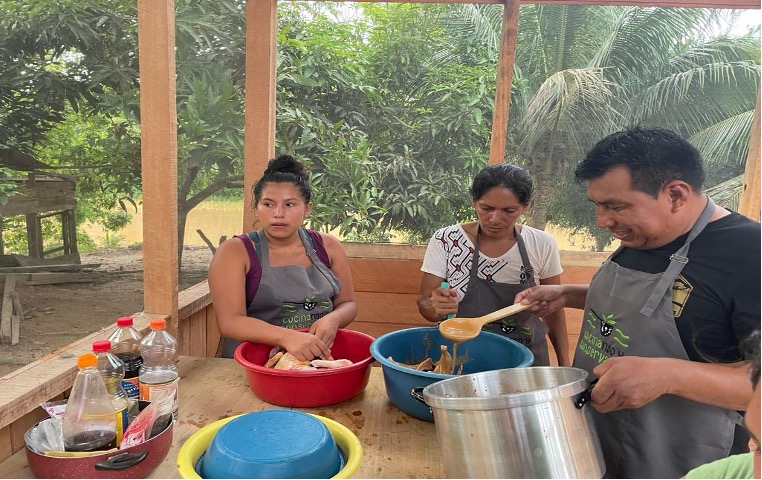
Taller Cocina Amazónica

preparation of recipes using local products

Taller de Cocina Nativa

Preparation of traditional dishes

Partners and Allies

Partners or Allied Organizations

Organization Name Organization Role in the Experience
Asociación Cáritas Madre de Dios Aliada